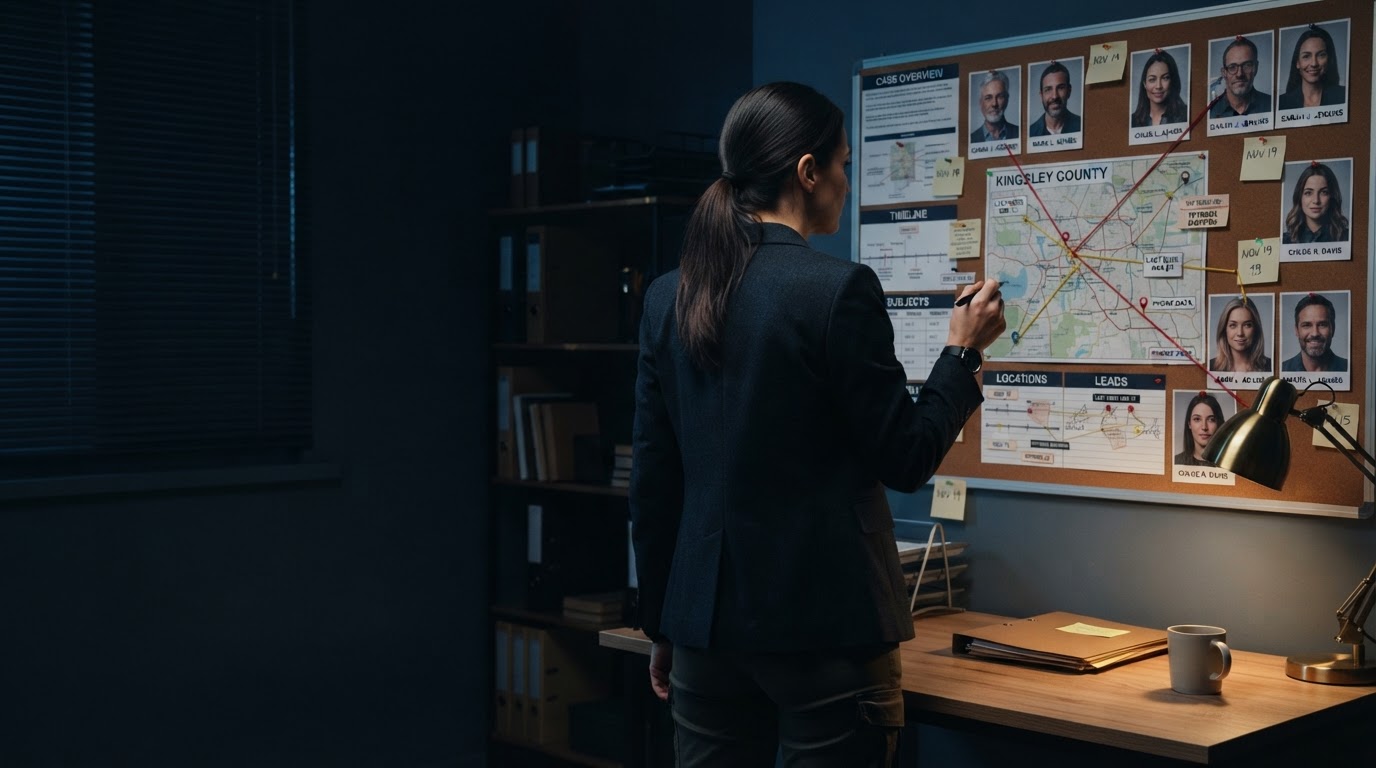
Missing Person Investigations
When someone cannot be located, reliable information and a focused investigative plan can help identify possible leads and determine appropriate next steps.
Blackwell's Private Investigative Service conducts lawful missing person investigations and locate research for families, attorneys, and other authorized clients throughout Wake County, Durham County, and surrounding North Carolina communities.
A private investigator does not replace law enforcement, cannot guarantee that a person will be located, and immediately refers emergencies or suspected crimes to law enforcement.
If Someone May Be in Immediate Danger
If a child, elderly adult, vulnerable person, or anyone believed to be in immediate danger is missing, contact 911 or the appropriate law-enforcement agency immediately. A private investigator does not replace law enforcement and cannot activate an AMBER, Silver, Missing Endangered, Ashanti, or other official alert.
Official Missing Person Resources
The following official organizations provide information and assistance for missing-person cases. These resources do not replace contacting 911 or the law-enforcement agency with jurisdiction over the disappearance.
North Carolina Center for Missing Persons
The official North Carolina clearinghouse for missing adults, missing children, and state missing-person alerts.
Visit nccmp.ncshp.govNational Center for Missing & Exploited Children
National guidance and assistance for families after a missing child has been reported to law enforcement.
Visit missingkids.orgWhen a Missing Person Investigator May Help
Not every person-locate case involves the same circumstances. Some clients are concerned about a recent and unexplained disappearance. Others need help reconnecting with an estranged relative, finding a long-lost contact, or locating a hard-to-find adult for a legitimate purpose.
Missing or Unreachable Adults
Assistance developing and following lawful leads when an adult has unexpectedly stopped communicating or cannot be located through normal means.
Estranged Family Members
Research intended to help locate a parent, adult child, sibling, or other relative with whom contact has been lost.
Long-Lost Relatives or Friends
Lawful locate research for people attempting to reconnect with a former friend, relative, classmate, or other known contact.
Welfare-Related Concerns
Investigative support when there is a legitimate concern about an adult's circumstances but the situation does not constitute an immediate emergency.
Hard-to-Find Individuals
Address research, lead development, and possible field verification involving someone whose current location is unknown or outdated.
Former Associates or Personal Contacts
Locate work involving a former coworker, neighbor, business contact, or another person with whom the client has a legitimate prior connection.
Family History and Reconnection Matters
Careful research involving an established family relationship when the purpose of the search is lawful and appropriate.
Witnesses and Case-Related Subjects
Attorneys seeking witnesses, defendants, respondents, parties, or other case-related individuals should visit the dedicated locate page.
Witness and Subject Locate InvestigationsBlackwell's reviews the client's identity, the client's relationship to the person being sought, the purpose of the search, and any known safety concerns before accepting a locate assignment.
What Is the Difference Between a Missing Person Investigation and a Person Locate?
A missing person investigation generally involves someone whose location is unknown and whose absence may be unexpected or concerning.
A person-locate investigation may involve an estranged relative, long-lost friend, former associate, witness, or another hard-to-find adult.
Skip tracing refers to research used to develop possible addresses, contact information, affiliations, or other leads connected to a person. Database and public-record results are investigative leads that may require independent verification. They should not automatically be treated as confirmed facts.
How a Missing Person Investigation Works
Confidential Consultation and Purpose Review
Review who is being sought, the client's relationship to the person, why the search is requested, potential safety concerns, and whether law enforcement or an attorney is already involved.
Known-Information Review
Organize names, aliases, photographs, dates of birth, former addresses, phone numbers, vehicles, employment, family members, associates, social-media profiles, and the person's last known contact or location.
Research and Lead Development
Use lawful sources to develop possible addresses, contact information, affiliations, relocation indicators, and other relevant leads.
Verification and Reporting
When appropriate, conduct field verification, respectful outreach, interviews, or additional research and organize relevant findings for the client.
Available methods and deliverables depend on the purpose of the assignment, information provided, lawful access, privacy considerations, safety concerns, and whether the located person appears willing to have contact.
Methods That May Be Used to Locate Someone
Blackwell's does not access private accounts, protected databases without authorization, or information through prohibited methods.
Preparing for a Missing Person or Locate Investigation
Accurate information can help an investigator distinguish one person from another, eliminate outdated leads, and focus the investigation on the most relevant people, records, dates, and locations.
Helpful information may include:
- Full legal name
- Known aliases or former names
- Recent and historical photographs
- Approximate age or date of birth
- Last-known home, work, or school location
- Previous addresses
- Current or former telephone numbers
- Current or former email addresses
- Vehicle description and license-plate information
- Employment or business information
- Known relatives, friends, coworkers, or associates
- Public social-media profiles
- Date and circumstances of the last contact
- Possible destinations or relocation plans
- Medical, cognitive, or mobility concerns when relevant
- Police-report or investigating-agency information
- Steps already taken to locate the person
- The client's relationship to the person
- The legitimate purpose of the search
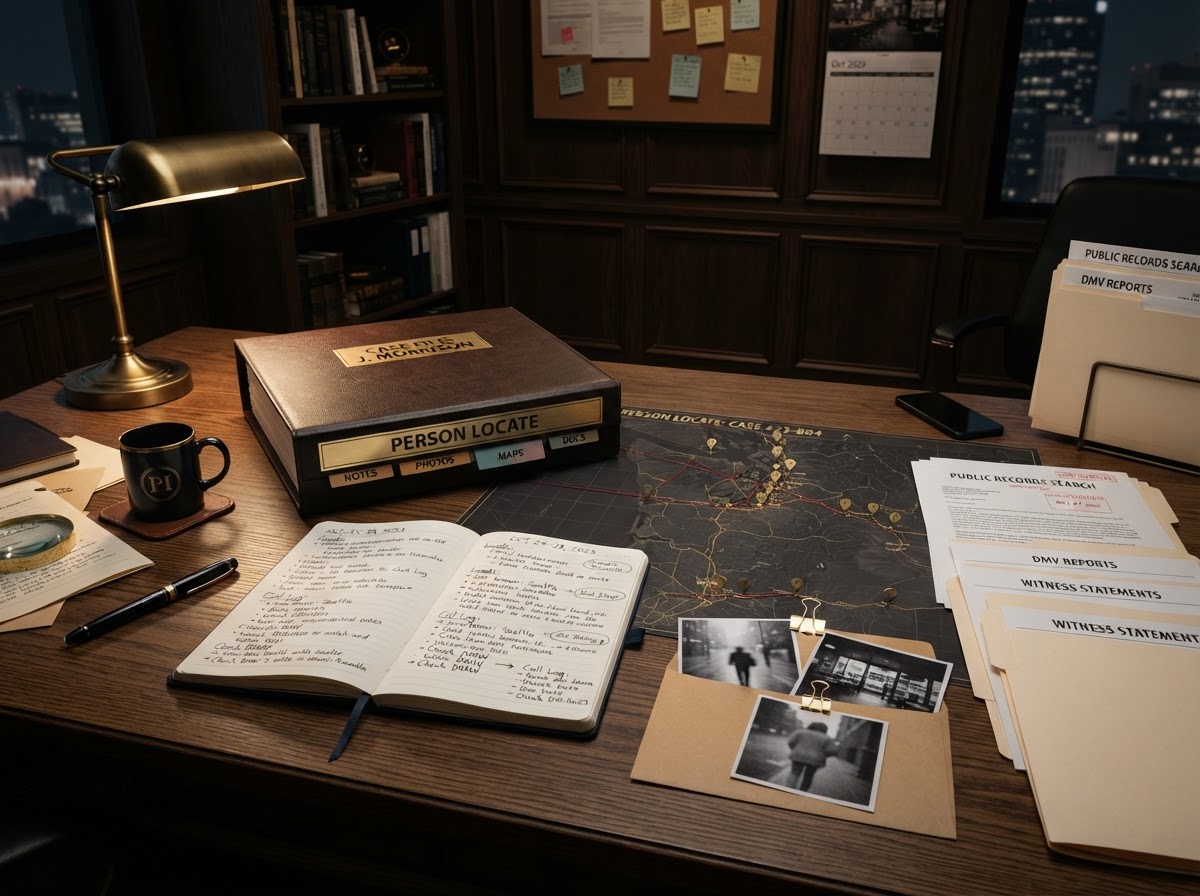
Privacy and Safety in Person-Locate Investigations
Finding a possible location does not automatically mean that an adult's address or private information will be released to the requesting person. Blackwell's considers the purpose of the search, the relationship between the parties, known safety concerns, protective orders, and the located person's privacy.
Depending on the circumstances, an investigator may verify that the person appears safe, request permission to share contact information, or offer to pass along the client's contact information without disclosing the person's exact location.
Blackwell's will not knowingly assist with stalking, harassment, intimidation, domestic abuse, evasion of a protective order, or another improper purpose. An assignment may be refused or discontinued if safety, identity, authority, relationship, or purpose cannot be reasonably established.
Working Alongside an Existing Missing-Person Investigation
When law enforcement is already involved, Blackwell's may organize client-provided information, review leads, conduct lawful supplemental research, or document information for delivery to the appropriate investigator.
Blackwell's will not interfere with an active law-enforcement investigation, represent itself as a government agency, direct official investigative activity, or promise that information will result in official action.
The client should inform Blackwell's when a police department, sheriff's office, state agency, attorney, guardian, or court is already involved.
Lawful and Ethical Missing Person Investigations
What we will and will not do
Blackwell's conducts lawful fact-finding and person-locate research. The client remains responsible for truthfully disclosing the purpose of the search and any known legal, domestic, or safety concerns.
Missing Person Investigations in Wake and Durham Counties
Based in Wake County, Blackwell's Private Investigative Service provides missing person investigations, person-locate research, address verification, and field investigation throughout Wake and Durham counties.
Common service areas include Raleigh, Durham, Cary, Apex, Garner, Wake Forest, Holly Springs, Fuquay-Varina, Morrisville, Research Triangle Park, and surrounding communities.
Assignments elsewhere in North Carolina may be considered depending on the circumstances, investigative objective, scheduling, travel requirements, and scope of work.
Why Clients Choose Blackwell's
Direct Investigator Communication
Clients can communicate directly with the investigator handling the assignment.
North Carolina Licensed Private Investigator
Blackwell's operates under North Carolina Private Protective Services Board licensing. License #2872.
Defined Scope and Clear Reporting
Each accepted assignment begins with an agreed investigative objective and concludes with reporting appropriate to the work performed.
Discreet and Safety-Conscious Methods
Sensitive locate matters are handled with attention to lawful authority, privacy, client purpose, and the safety of everyone involved.
Frequently Asked Questions About Missing Person Investigations
Related Services
Witness and Subject Locates
Attorney-directed locate work for witnesses, parties, and case-related individuals.
Surveillance Operations
Lawful surveillance and activity documentation when observation is relevant.
Attorney Investigative Support
Investigative support for attorneys across North Carolina.
Due Diligence Investigations
Public-record and background research for informed decisions.
Service Areas
View the communities Blackwell's serves throughout Wake and Durham counties.
Trying to Locate Someone?
Speak privately with Blackwell's about who you are trying to locate, your relationship to that person, the last-known information, and the purpose of the search. We will explain what investigative steps may be lawful, realistic, and appropriate.