Civil Litigation Investigations in North Carolina
Civil cases may depend on witnesses, photographs, records, timelines, surveillance, and physical conditions that are not fully documented in the original reports.
Blackwell's Private Investigative Service provides lawful, fact-focused investigative support for civil attorneys, businesses, and represented clients throughout Wake County, Durham County, and surrounding North Carolina communities.
Our role is to locate, observe, research, document, and report relevant information for professional review. We do not provide legal advice, determine liability, or predict the outcome of a case.
Why a Civil Matter May Require Independent Investigation
Police reports, incident reports, insurance records, photographs, and pleadings may not answer every factual question involved in a civil dispute. Witnesses may not have been identified, surveillance footage may be time-sensitive, physical conditions may change, and statements or timelines may contain gaps requiring further review.
A civil litigation investigator can help counsel identify, preserve, organize, and document relevant factual information. The investigative objective should be clearly defined by the attorney or authorized client before work begins.
Questions That May Require Investigative Follow-Up
- Are there witnesses who were never identified or interviewed?
- Has the physical location changed since the incident?
- Are additional photographs, video, measurements, or diagrams needed?
- Could nearby businesses or residences have relevant surveillance footage?
- Are warning signs, lighting conditions, obstructions, stairs, handrails, or walking surfaces relevant?
- Do statements, records, photographs, and timelines appear consistent?
- Does a person, business, property, vehicle, or address require public-record research?
- Is lawful surveillance or field verification appropriate?
- Is information at risk of being lost because of an approaching deadline or changing condition?
Investigative Services
Investigative Support for Civil Litigation
Witness Location
Research current addresses, contact information, known affiliations, and other lawful leads that may assist in locating a witness or case-related individual.
Witness & Subject LocatesWitness Interviews and Statements
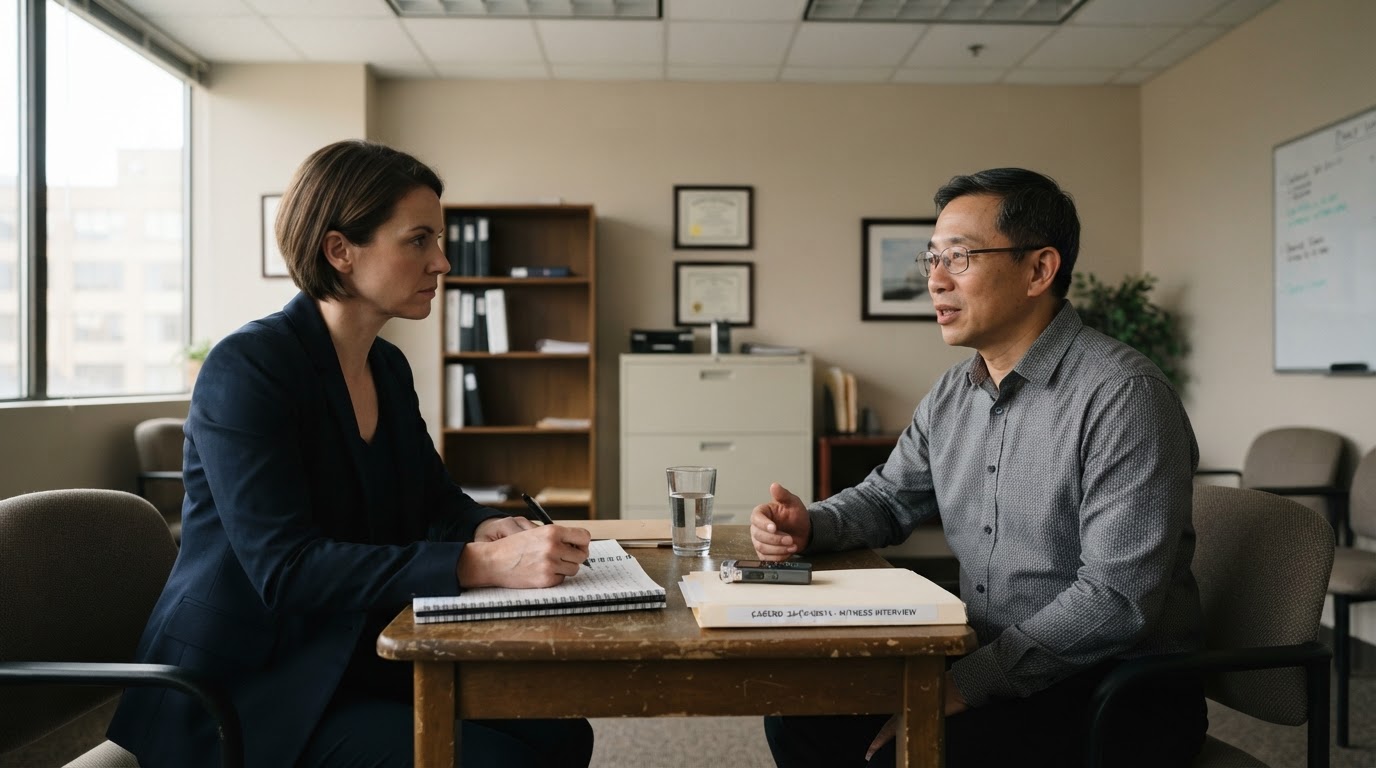
Conduct neutral, fact-focused interviews and document information through interview summaries, notes, or recorded statements when lawful, appropriate, and authorized.
Witness Interviews & Recorded StatementsAccident and Scene Documentation
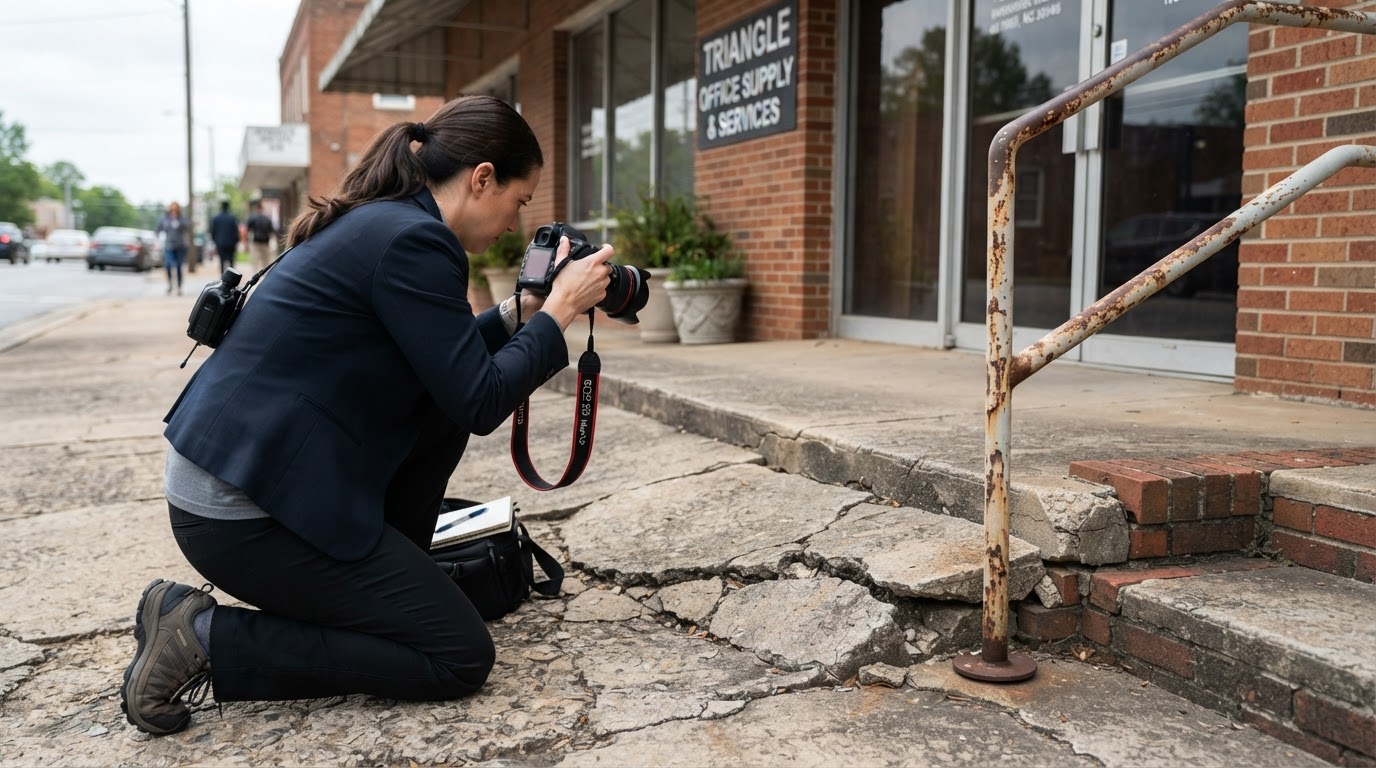
Photograph and document relevant locations, observable conditions, entrances, exits, walkways, stairs, lighting, signage, obstructions, camera locations, and surrounding areas.
Scene Investigations & Evidence DocumentationPublic-Record Research
Research legally available court records, property information, business records, addresses, affiliations, litigation history, and other public information relevant to the authorized assignment.
Background & Public-Record InvestigationsSurveillance and Activity Documentation
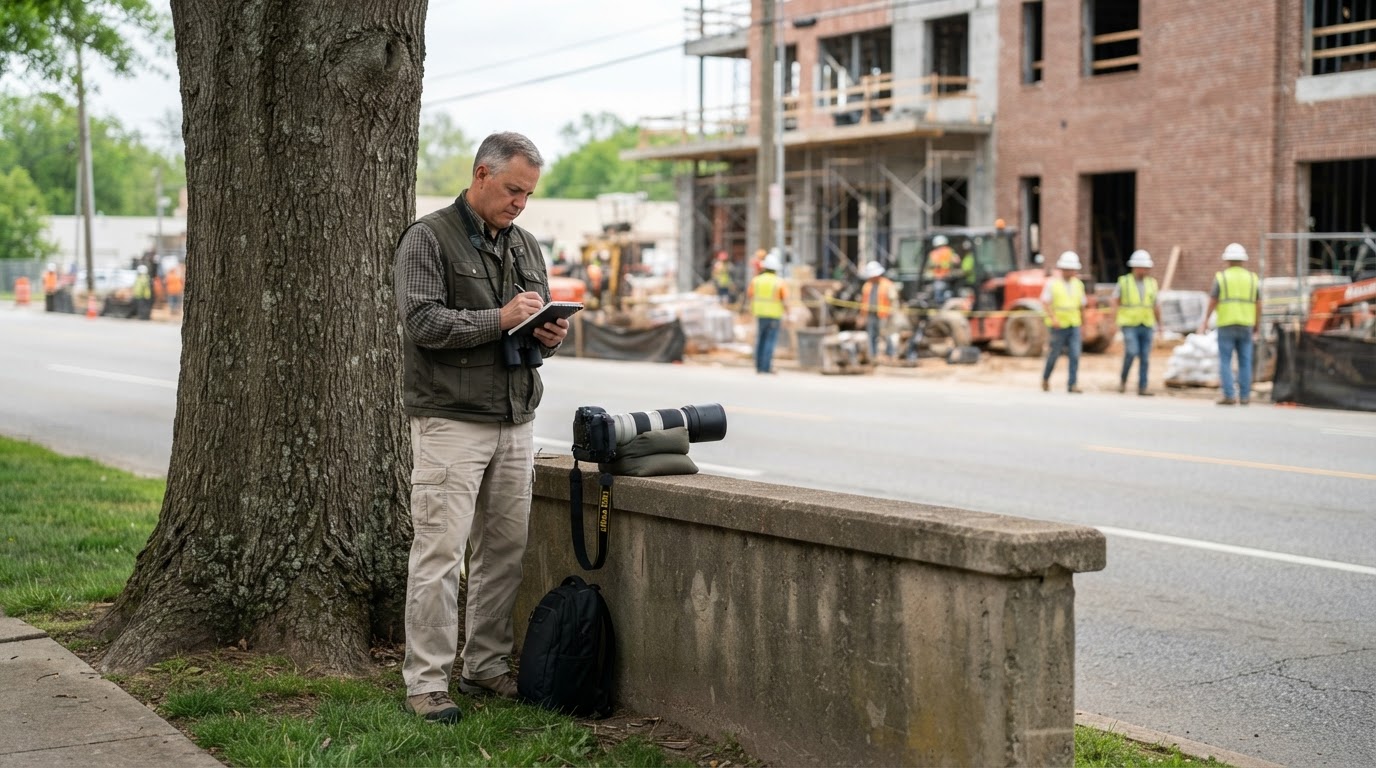
Conduct lawful observation and document activity when surveillance is appropriate and relevant to the questions identified in the assignment.
Surveillance OperationsTimeline Development
Organize reports, statements, photographs, videos, records, dates, locations, and investigative findings into a clear chronological timeline for review.
Field Verification
Visit relevant locations to verify addresses, property conditions, businesses, routes, visibility, access points, or other observable facts.
Photographs, Video, and Reporting
Prepare organized factual documentation that may include photographs, video, activity logs, source references, interview summaries, scene notes, and investigative reports.
Personal Injury, Slip-and-Fall, and Premises Investigations
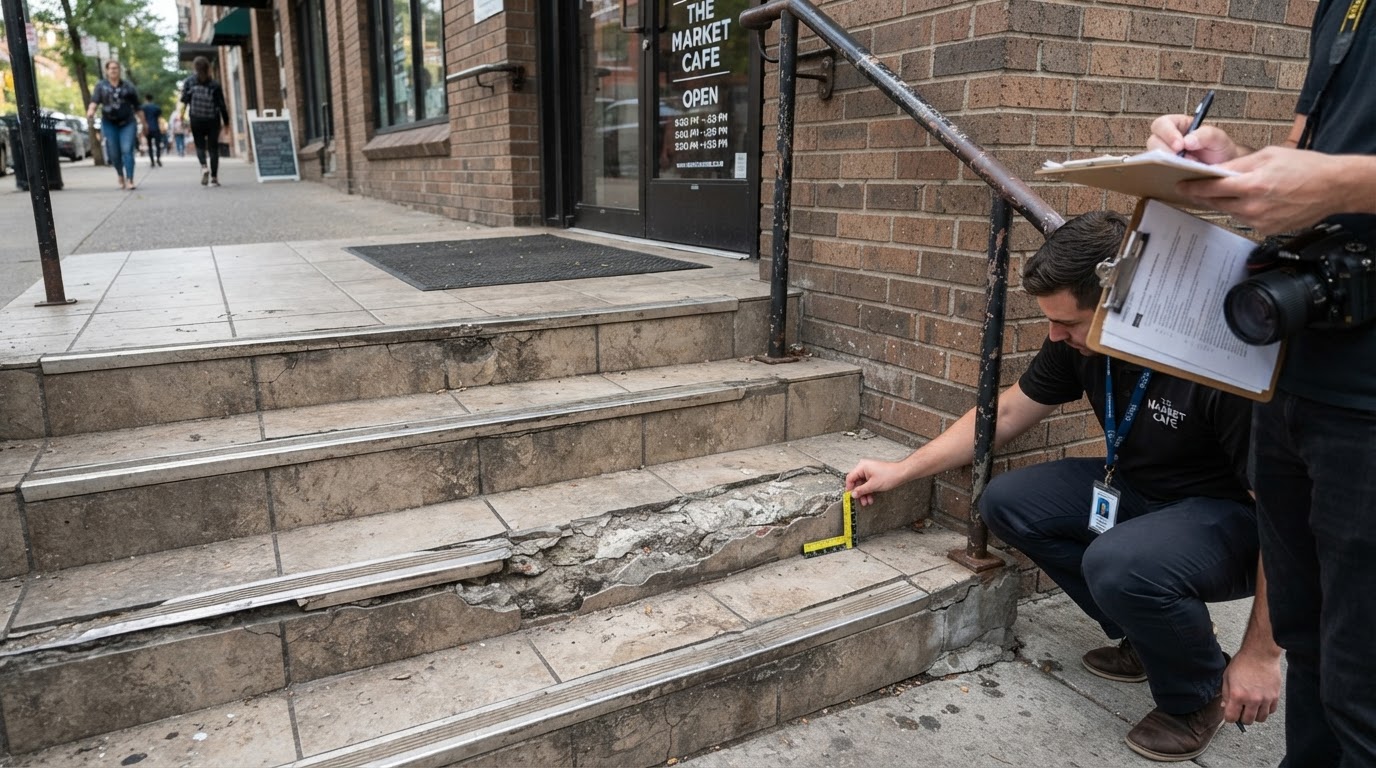
When someone is injured at a business, residence, workplace, parking area, sidewalk, or other property, the condition of the location may become important to the civil matter. A later site visit cannot recreate the exact moment of the incident, but it may document conditions, measurements, visibility, access points, camera locations, and changes that are relevant to counsel's review.
Depending on the authorized assignment, Blackwell's may:
- Photograph and record the location
- Document floors, sidewalks, stairs, ramps, handrails, curbs, parking areas, entrances, and exits
- Document lighting, visibility, weather-related conditions, obstructions, and warning signs
- Identify visible surveillance-camera locations
- Measure relevant distances or physical features when appropriate
- Prepare diagrams, location notes, and photographic logs
- Identify potential witnesses or nearby businesses
- Conduct a lawful neighborhood or business canvass when authorized
- Document apparent repairs or changes made after the reported incident
- Research legally available information relating to the property, business, or incident
- Organize photographs, statements, records, and dates into a timeline
Conditions observed during a later investigation may not be identical to conditions on the date of the reported incident. Reports should identify when observations, measurements, photographs, and video were made.
Civil Matters That May Require Investigative Support
The investigative need depends on the facts of the matter rather than its label. Subject to review, lawful authority, scheduling, and the agreed scope, investigative assignments may relate to matters involving:
Listing a type of civil matter does not represent a claim of specialized legal expertise, guarantee acceptance of an assignment, or predict the outcome of a case. Blackwell's provides investigative services—not legal representation, engineering analysis, medical opinions, accident reconstruction, or expert legal conclusions.
Why Early Investigation May Matter
Some information may become more difficult to obtain as time passes. Surveillance video may be overwritten, property conditions may be repaired, vehicles may be moved, witnesses may relocate, and memories may become less precise.
Attorneys and authorized clients should identify time-sensitive investigative needs as early as possible. Blackwell's can document available information but cannot guarantee that evidence still exists or that a third party will voluntarily preserve or provide it.
Information That May Be Time-Sensitive
- Surveillance footage that may be overwritten
- Temporary warning signs or barriers
- Weather-related conditions
- Damage that may be repaired
- Vehicles or equipment that may be moved
- Witnesses whose identities are incomplete
- Businesses that may close or change ownership
- Social-media or publicly available online information
- Approaching hearings, mediation, discovery, or trial deadlines
Blackwell's does not issue subpoenas, preservation orders, or legal demands. Those matters remain with counsel.
Workers' Compensation and Insurance Investigations
Workers' compensation and insurance matters may involve questions about activity, locations, employment, timelines, prior claims, witnesses, or other observable and legally available information.
Depending on the assignment, Blackwell's may assist with lawful surveillance, activity documentation, field verification, public-record research, witness work, scene documentation, and factual reporting.
The purpose is to document objective information for professional review. Blackwell's does not determine whether a claim is valid or fraudulent, diagnose an injury, interpret medical records, or make legal conclusions.
Locating and Interviewing Civil Witnesses
Witnesses may be difficult to locate because addresses, telephone numbers, employment, and personal circumstances change. In other cases, a witness is known but has not been interviewed in detail.
Blackwell's may assist with lawful witness-location research, field verification, contact attempts, neutral interviews, and written or recorded statements when appropriate and authorized.
Locate the Witness
Research lawful address, contact, public-record, affiliation, and field-verification leads.
Conduct a Fact-Focused Interview
Ask neutral questions related to the authorized assignment without coaching or suggesting answers.
Document the Information
Prepare interview summaries, notes, or recorded statements when lawful, appropriate, and authorized.
Blackwell's does not threaten, harass, deceive, coach, or pressure a witness. Documentation should accurately reflect what the witness reports.
How the Civil Litigation Investigation Process Works
Define the Investigative Objective
Counsel or the authorized client identifies the factual questions, people, places, records, deadlines, and concerns requiring investigation.
Establish the Scope
Blackwell's and the client define the authorized tasks, priorities, communication method, reporting requirements, deadlines, and practical limitations.
Conduct the Investigation
The investigator performs the agreed witness work, research, scene documentation, field verification, surveillance, or other lawful investigative activity.
Report the Findings
Relevant findings are organized for review through investigative reports, interview summaries, photographs, video, timelines, activity logs, and other agreed deliverables.
Attorney involvement does not automatically make every communication, report, photograph, recording, or investigative document privileged or protected work product. Counsel is responsible for privilege, discovery, preservation, disclosure, and admissibility determinations.
Investigative Reporting for Attorney and Client Review
Depending on the assignment, potential deliverables may include:
- Written investigative reports
- Chronological timelines
- Witness-location results
- Witness interview summaries
- Recorded witness statements when authorized
- Scene photographs and video
- Photographic logs and captions
- Measurements, diagrams, and location notes
- Surveillance photographs or video
- Chronological activity logs
- Public-record research findings
- Address and affiliation research
- Source documentation
- Supporting notes and authorized case materials
- Investigator testimony concerning personally performed work when requested and appropriate
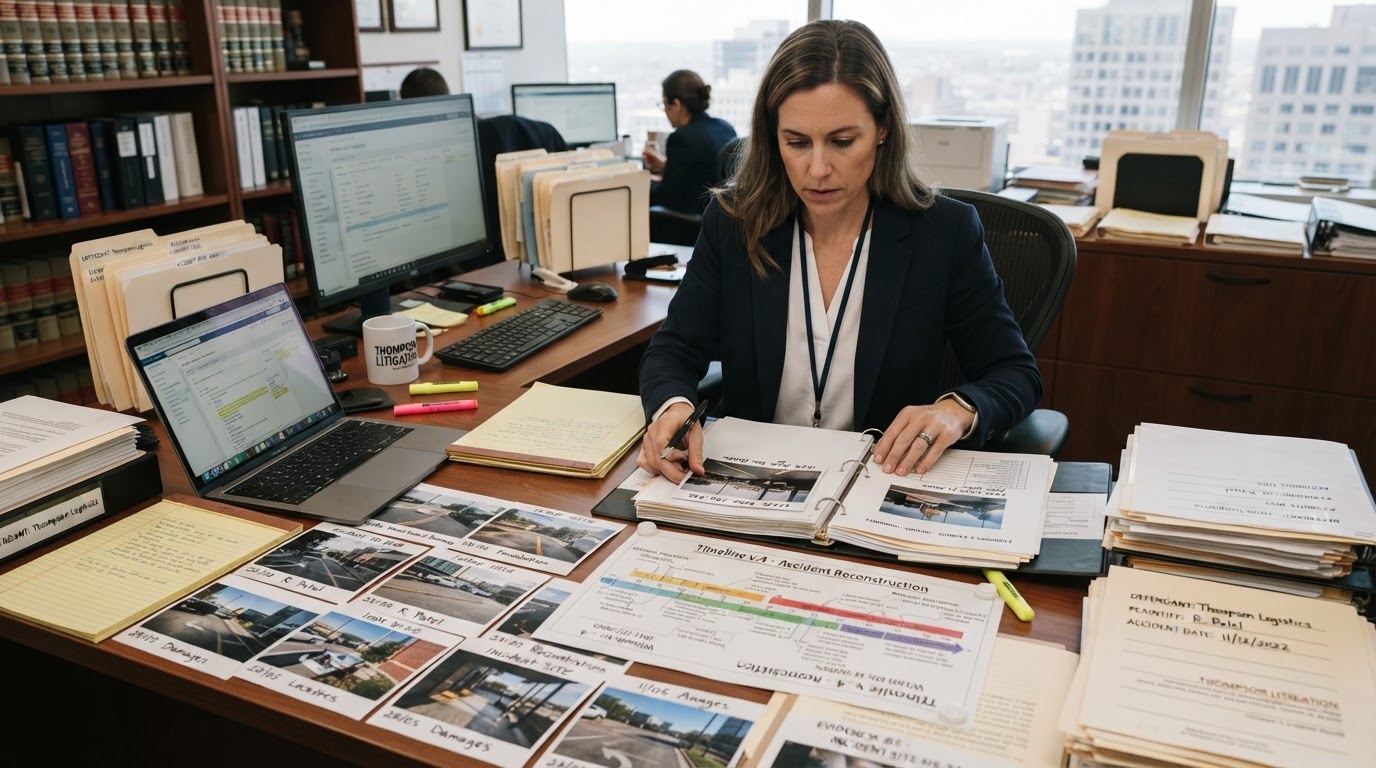
Exact deliverables depend on the assignment, available information, witness cooperation, lawful authority, deadlines, and agreed scope of work.
Lawful and Objective Civil Investigative Support
We May
- Locate witnesses and case-related individuals
- Conduct neutral, fact-focused interviews
- Document scenes and observable property conditions
- Photograph and record relevant locations
- Research legally available public information
- Conduct authorized field investigation
- Conduct lawful surveillance when appropriate
- Organize timelines and factual findings
- Prepare investigative reports and supporting documentation
- Testify about work personally performed when appropriate
We Do Not
- Provide legal advice or legal representation
- Decide litigation strategy
- Guarantee settlement, dismissal, or any case outcome
- Determine liability, negligence, credibility, or admissibility
- Diagnose injuries or provide medical opinions
- Provide engineering or accident-reconstruction conclusions unless performed by a properly qualified specialist
- Coach witnesses or tell them what to say
- Threaten, harass, intimidate, or deceive witnesses
- Trespass or unlawfully enter private property
- Hack accounts, devices, or private communications
- Alter, conceal, fabricate, or destroy evidence
- Impersonate law enforcement, attorneys, or court personnel
- Interfere with court proceedings or lawful investigations
Blackwell's documents facts for review by counsel. The attorney remains responsible for legal advice, case strategy, privilege determinations, discovery obligations, evidence preservation, admissibility questions, and courtroom presentation.
Civil Litigation Investigations in Wake and Durham Counties
Blackwell's Private Investigative Service is based in Wake County and assists attorneys, businesses, and represented clients throughout Wake County, Durham County, and surrounding North Carolina communities.
Common service areas include Raleigh, Cary, Apex, Garner, Wake Forest, Holly Springs, Fuquay-Varina, Morrisville, Research Triangle Park, Durham, North Durham, and South Durham.
Assignments elsewhere in North Carolina may be considered depending on the investigative objective, deadlines, scheduling, travel requirements, and scope of work.
Licensed North Carolina Investigative Support
Blackwell's Private Investigative Service provides professional civil and criminal investigative support involving witnesses, surveillance, records research, field investigation, scene documentation, timelines, and factual reporting.
Blackwell's operates under licensing by the North Carolina Private Protective Services Board. License #2872.
Our focus is lawful investigative methods, clearly defined assignments, professional communication, confidentiality, and organized reporting.
Meet Our InvestigatorsCivil Litigation Investigation FAQs
Related Investigative Services
Attorney Investigative Support
Broader investigative support for attorneys across civil, criminal, and other legal matters.
Learn MoreWitness Interviews & Recorded Statements
Fact-focused witness interviews and recorded statements when lawful and authorized.
Learn MoreWitness & Subject Locates
Lawful research and field verification to locate witnesses and case-related individuals.
Learn MoreScene Investigations & Evidence Documentation
Documenting observable conditions at relevant locations through photographs, video, and notes.
Learn MoreSurveillance Operations
Lawful surveillance and activity documentation when observation is relevant to the assignment.
Learn MoreBackground & Public-Record Investigations
Researching legally available public records, addresses, affiliations, and litigation history.
Learn MoreFraud & Theft Investigations
Investigative support for civil fraud and misrepresentation allegations and related matters.
Learn MoreCriminal Defense Investigations
Lawful investigative support for criminal defense counsel and clients.
Learn MoreNeed Investigative Support for a Civil Matter?
If you are an attorney, business, represented client, or individual with questions involving an accident, injury, witness, property condition, record, timeline, surveillance need, or another civil matter, contact Blackwell's to discuss the investigative objective.
We will explain what investigative services may be appropriate, what limitations apply, and whether the matter should first be coordinated with legal counsel.